Visiting timetableClosed
|Saturday, October 24, 2026Alhambra y Generalife, Calle Real de la Alhambra, 18009 Granada, Spain
Back to craft
materials
Alhambra Craft Guide: Understanding Muqarnas, Stucco, and Tile
How the Alhambra’s crafts work—process, pattern, and the illusion of weightless stone.
12/5/2025
17 min read
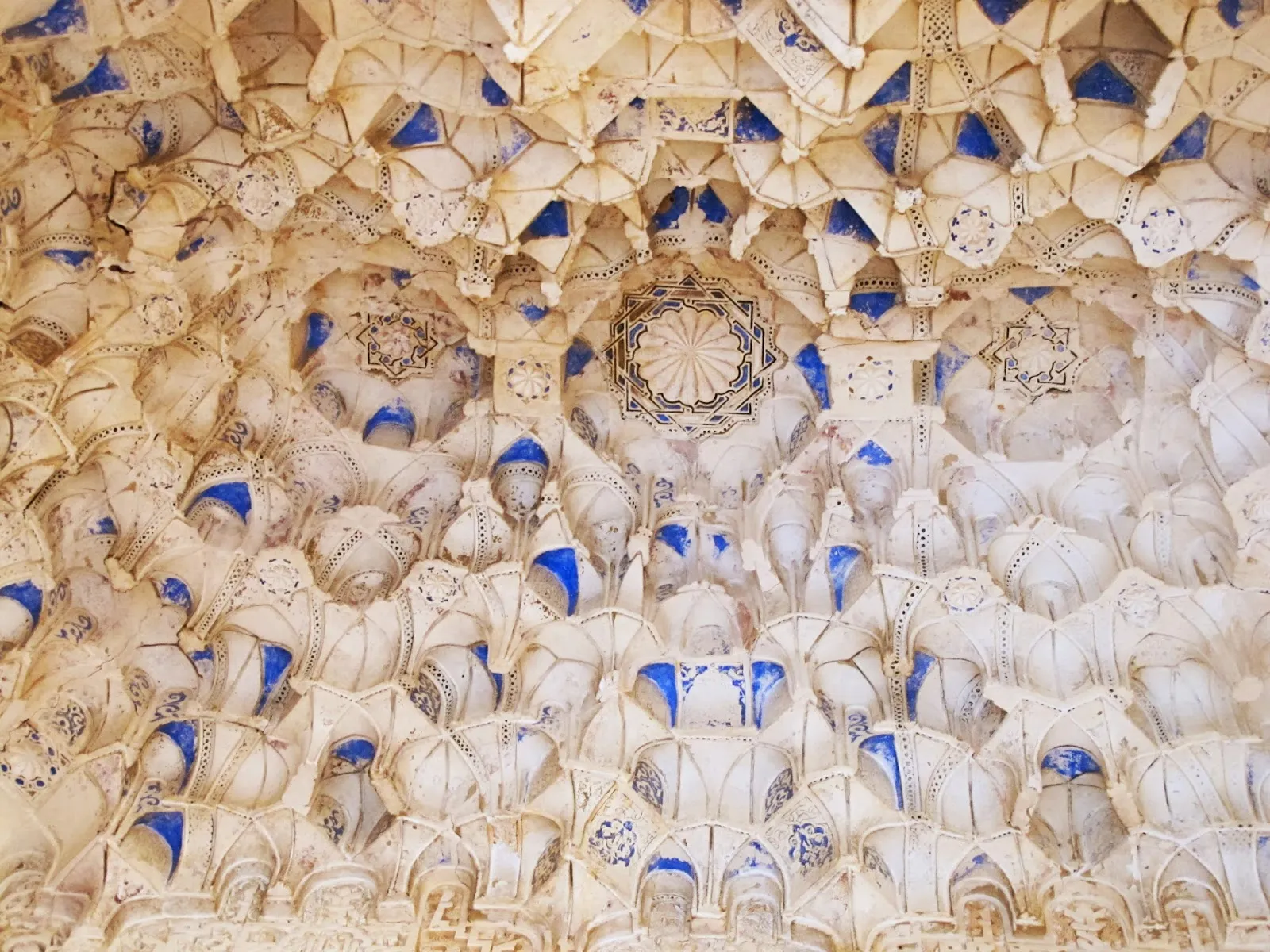
The Alhambra’s miracle is methodological: repeat, rotate, refine—until mass becomes lace.
Muqarnas (Honeycomb Vaults)
- Purpose: soften transitions, catch light, dissolve mass at domes and niches.
- Process: templates → gypsum modules → assembly in tiers → paint and gilding.
- Where: Lions’ Hall pavilions; Hall of the Two Sisters; Comares niches.
Carved Stucco
- Material: gypsum plaster with aggregates; thin yet crisp for undercutting.
- Method: cast panels, then carve on the wall; polychrome glazes and leaf once heightened contrasts.
- Reading: shallow relief near eye level; deeper carving higher for shadow drama.
Tilework (Zellij)
- Geometry: star polygons and strapwork grids; colors as structure (white, cobalt, black, green, honey, brown).
- Fabrication: fired tiles cut into shapes (tesserae) then set into mortar “trays.”
- Tip: look for hairline joints; repairs often use modern glazes—cooler tone, flatter sheen.
Wood Carpentry (Artesonado)
- Role: spans rooms with lightweight strength; pattern equals structure.
- Species: cedar and pine; painted coffers; starry fields echo floor tile.
- Sound: wood ceilings warm acoustics; hush is by design.
Spotting Time and Repair
- Tool chatter, crisp vs. rounded edges, paint ghosts, nail or screw intrusions.
- Reintegrations: lime‑based fills; color “lowered” so originals still lead.
Bottom Line
Craft is the Alhambra’s language—learn its grammar, hear its music.
About the Author

Granada Heritage Editor
I built this to help you enjoy the Alhambra calmly—smarter timing, kinder routes, and context that makes palaces and gardens sing.
Tags
muqarnas
stucco
zellij
carpentry
materials
Comments (0)
Leave a Comment
Loading comments...