A Moorish palace‑city of water, light, and verse
Stucco and cedar, tile and calligraphy, gardens strung with fountains—tradition meeting Renaissance change, survival meeting care, and Granada pouring its gold light across stone.
Table of Contents
Origins and hilltop foundations
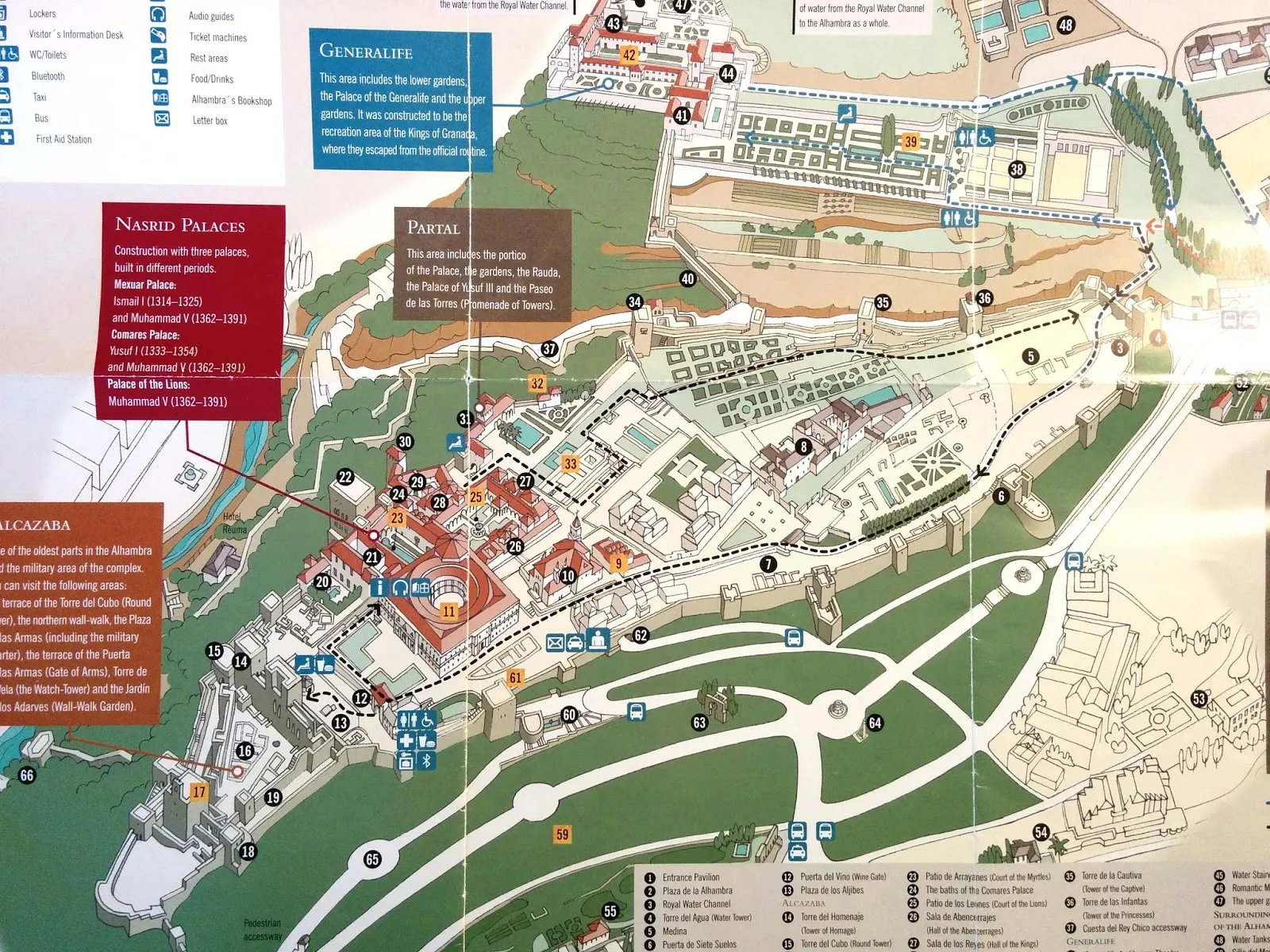
The Alhambra rises above Granada like a quiet thought becoming a city. Hilltop fortifications guarded a river valley and trade routes; over time, Nasrid rulers shaped stone and water into a palace‑citadel—courts strung with fountains, halls latticed with light, and gardens hung like poems from terraces. Foundations are practical—defense, storage, access—yet swiftly become lyrical: water lines are veins, walls become pages for calligraphy, and geometry becomes a way of thinking in public.
What we see today is layering: fortress bones (Alcazaba), palaces of water and text (Nasrid), a Renaissance ring (Charles V), and gardens (Generalife) that bind the ensemble with shade and sound. It is a place where architecture is not backdrop but instrument—light tuned to patios, water tuned to quiet, and craft tuned to memory, each part playing in harmony with Granada’s changing sky.
Nasrid courts: poetry, water, and power
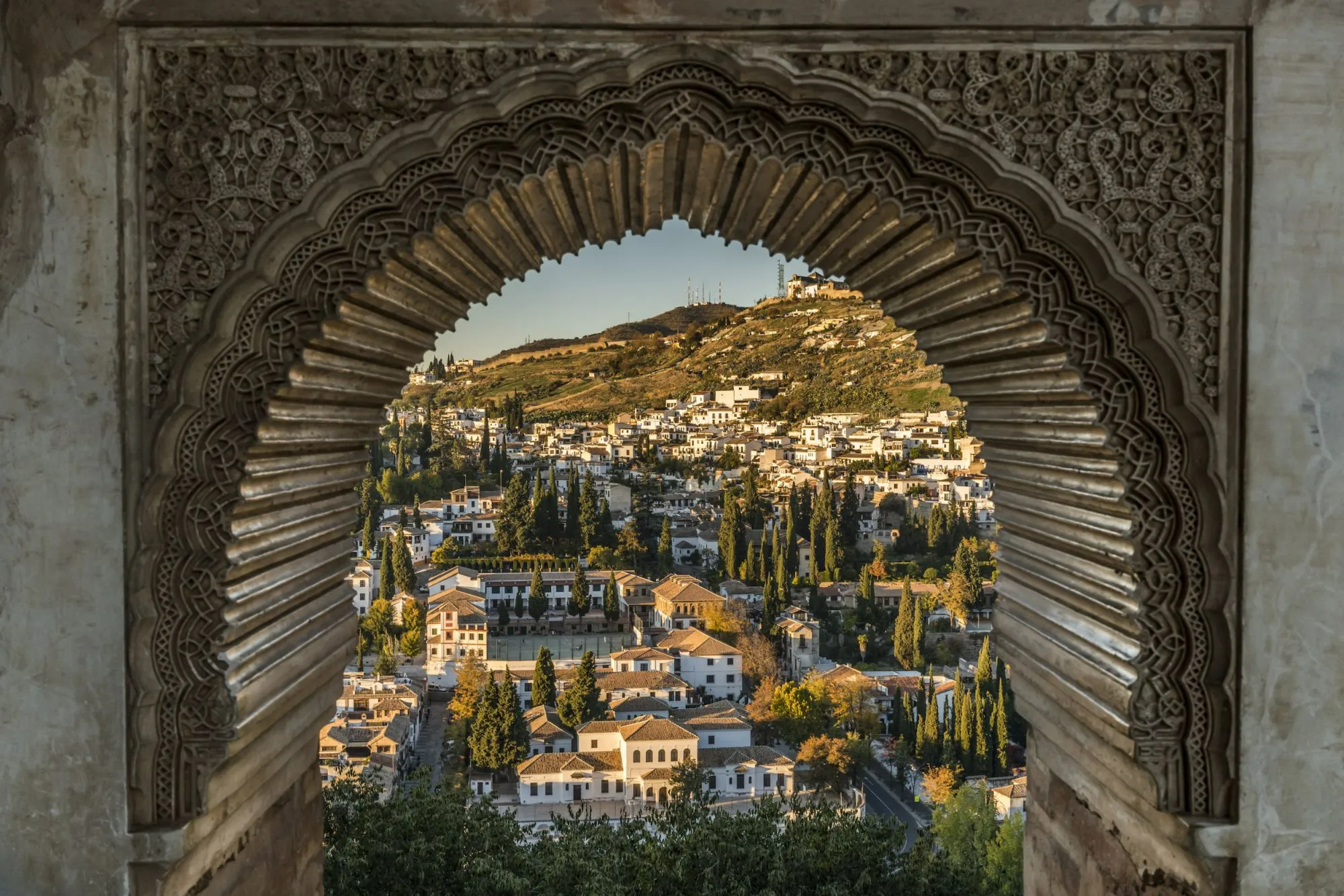
Court life becomes a shared language here: audiences, diplomatic meetings, and daily rhythms carried on the backs of fountains and shade. Water is protocol and poetry—cooling the air, soothing the pace, reflecting architecture until the building seems to breathe. Calligraphy curves along walls, verses lifting faith and governance into conversation; cedar ceilings pattern thought with order and play.
These rhythms bind city to hilltop: artisans, gardeners, officials, poets, and guards all moving within a geometry that guides sightlines and steps. Even when you visit quietly, you feel those traces—the cadence of water, the etiquette of shade and light, and the sense that Granada looks up here not only to see but to imagine.
Architecture and craft: stucco, tile, cedar
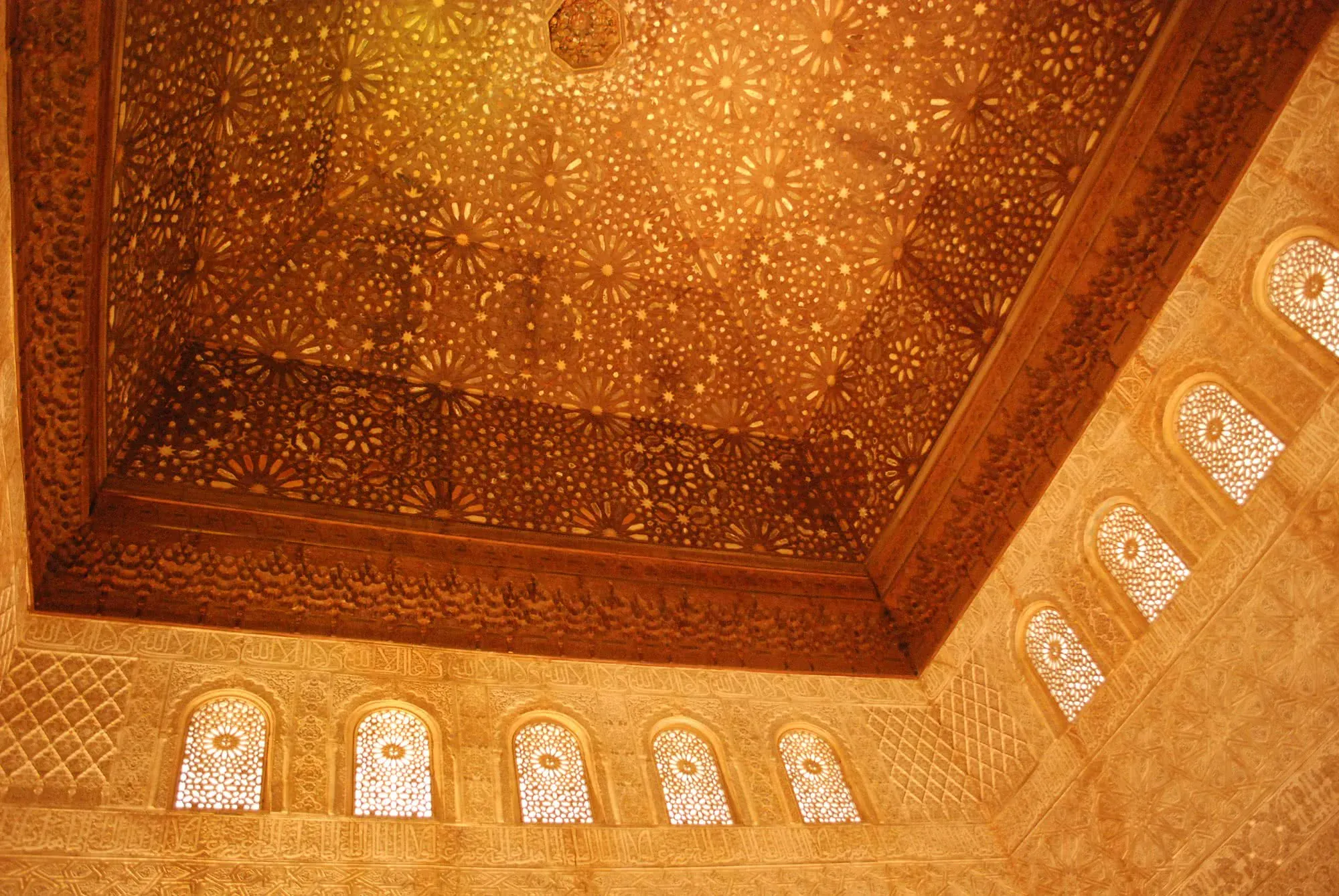
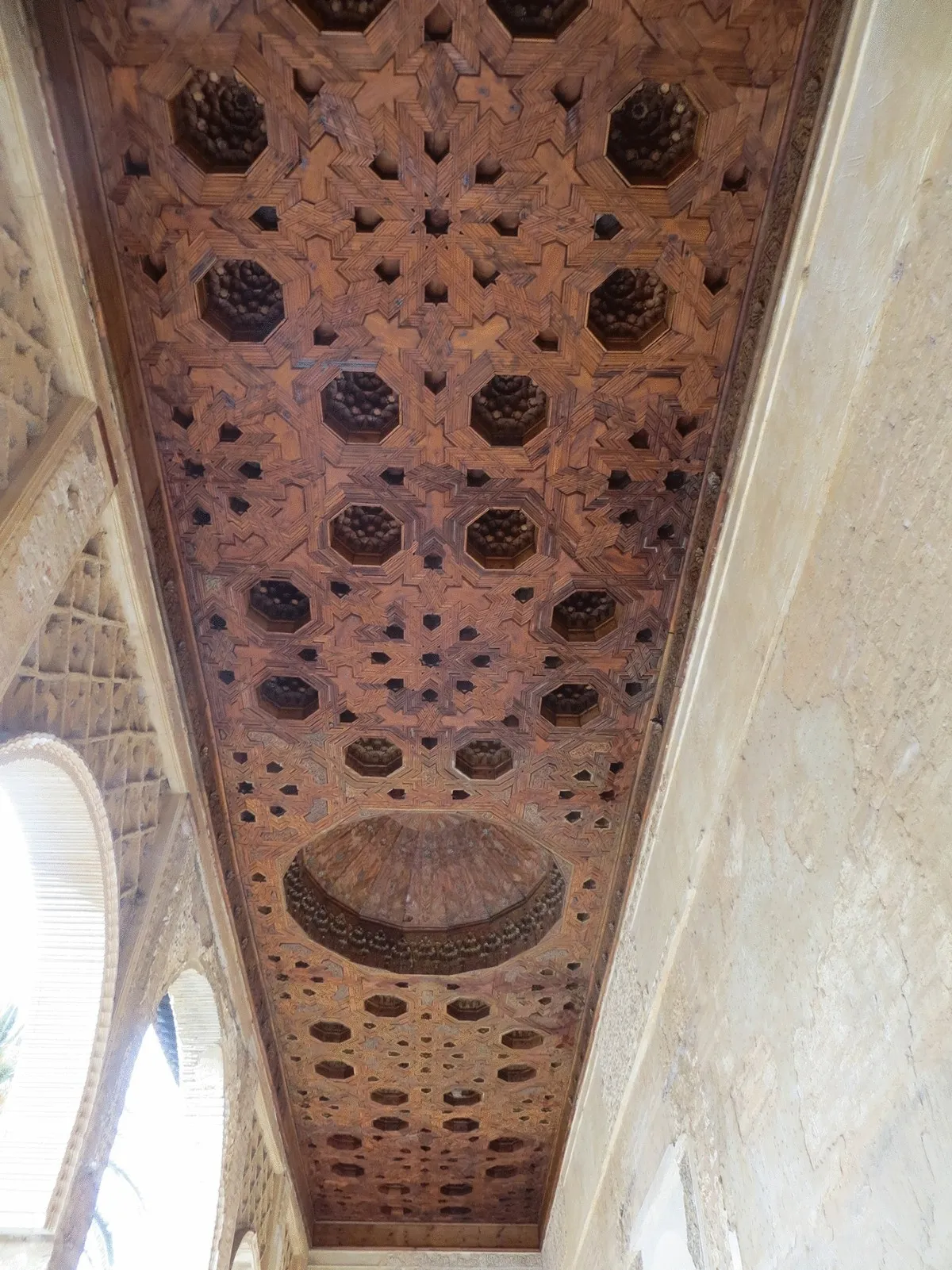
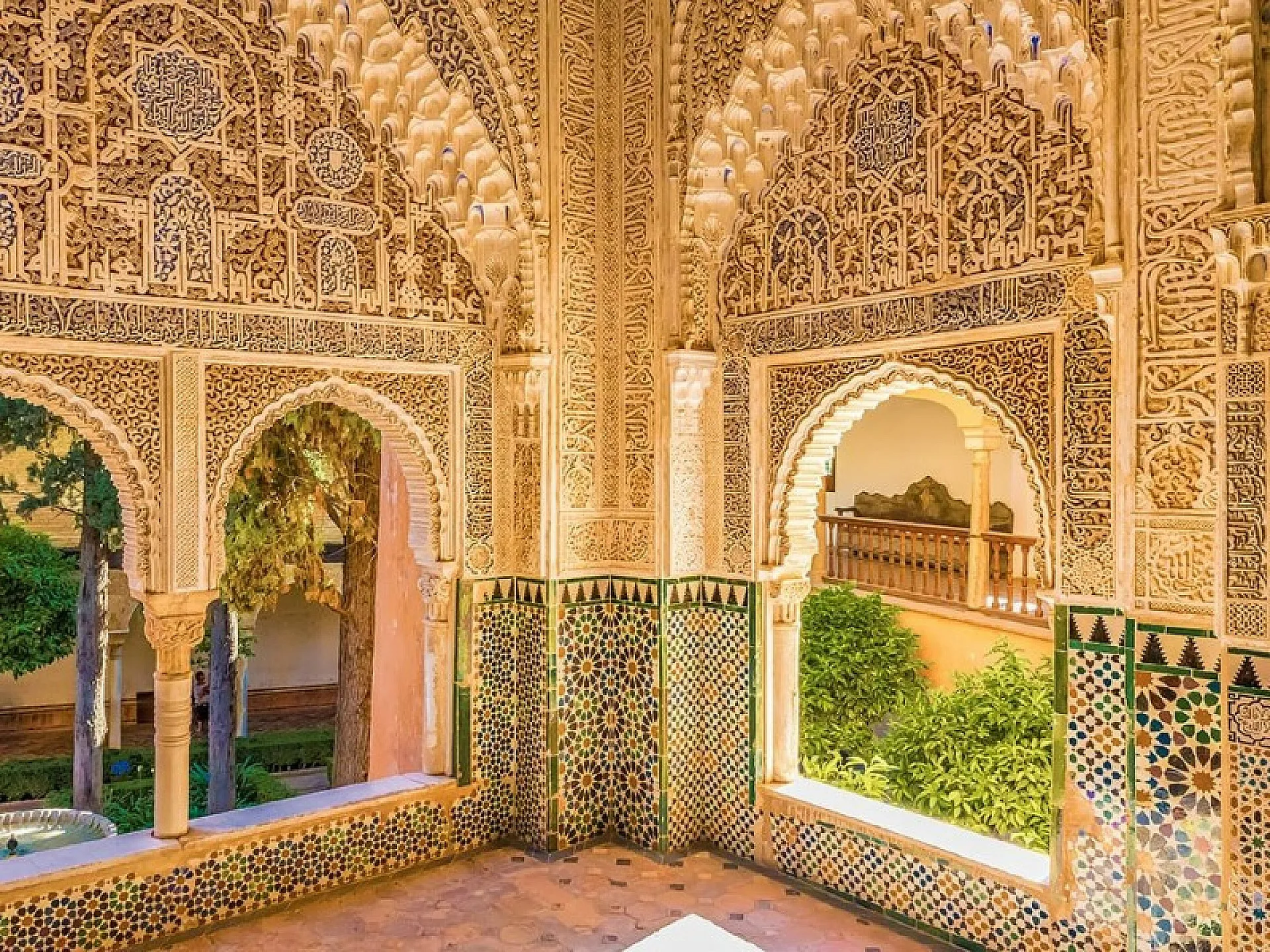
Inside, ornament is intention: carved stucco like lace, glazed tile cool to the touch, cedar ceilings cut into stars and coffers that think in geometry. Motifs repeat and vary—arabesques unfolding, kufic text becoming border and blessing, muqarnas dissolving edges into honeycomb light. Every courtyard balances symbolism with hospitality: places to sit, feel shade, hear water, and notice how color and texture teach calm.
Architecture here is choreography: sightlines to towers and Sierra Nevada, routes that step from patio to hall to mirador, and a cadence that guides you by sound (water), touch (stone and tile), and temperature (shade and sun). The result is immersive without hurry—details invite attention like friends calling softly from across a garden.
Fortress and city: Alcazaba and views
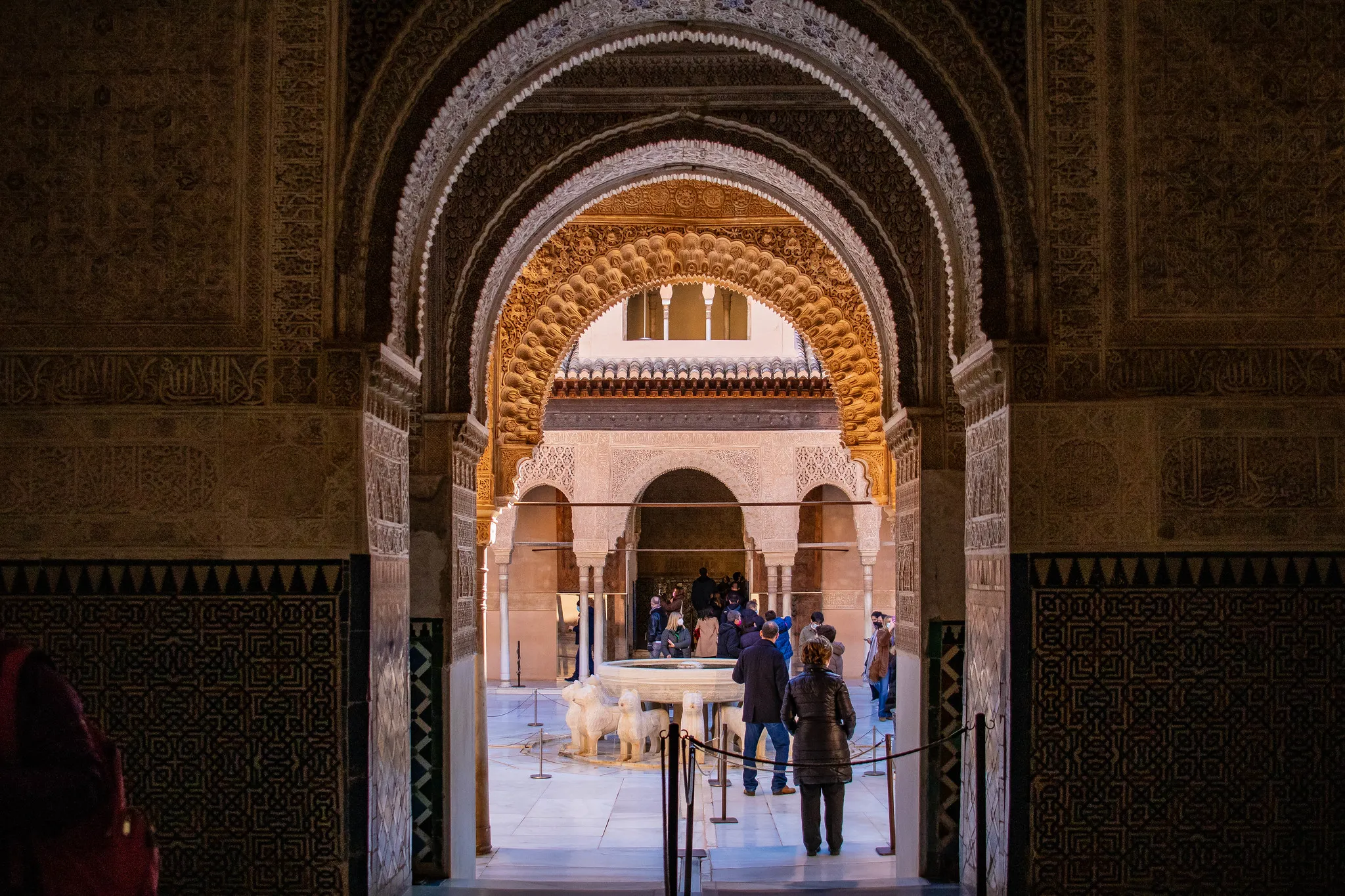
The Alcazaba holds the oldest bones of the Alhambra: towers like syllables of stone, ramparts folded along the hill, lookouts teaching you how the city sits in its valley. Wind and horizon conspire to turn viewpoints into stories—Granada becomes maps and memory at once.
It feels practical and poetic: defense lines, storage, and pathways stitched with beauty, always returning you to a view that steadies the pace. Multimedia guides add voices—how towers linked signals, how walls read the landscape, why routes curve to temper heat and light.
Conquest, change, and Renaissance layers
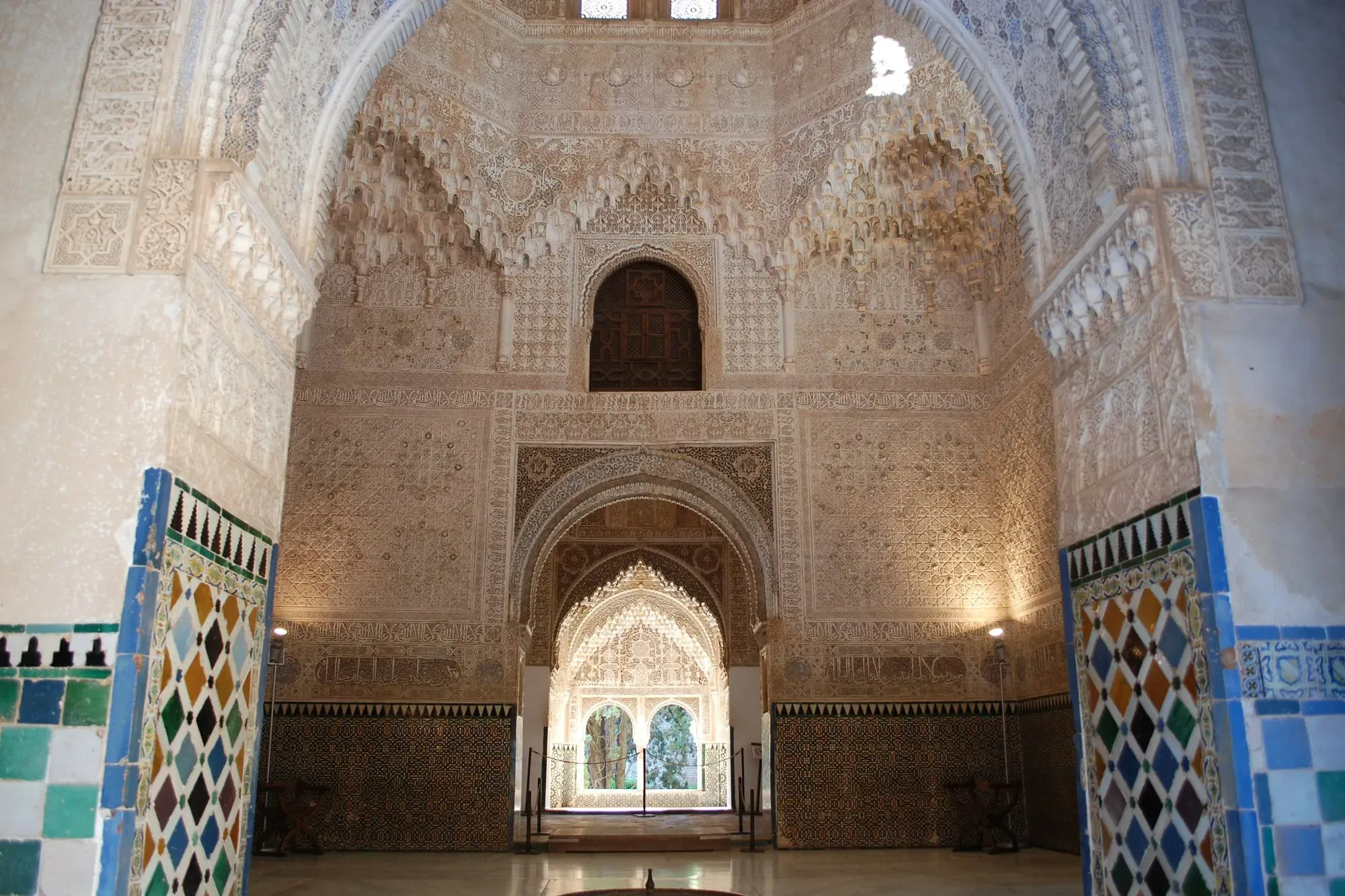
History here turns on a hinge: the Nasrid dynasty gives way to Castilian rule; palaces change use and meaning. Renaissance ambition arrives and sets a circular palace alongside filigree arcs—contrast made visible. Some halls fall quiet, some gardens survive by luck and care; narratives braid loss, adaptation, and new ceremony.
The Alhambra teaches that memory is practical care: conservation records, craftsmanship revived, water systems studied and restored. Paired with the Generalife, the ensemble rounds out the visit—poetry answered by horticulture, palaces balanced by terraces.
Loss, lore, and rediscovery
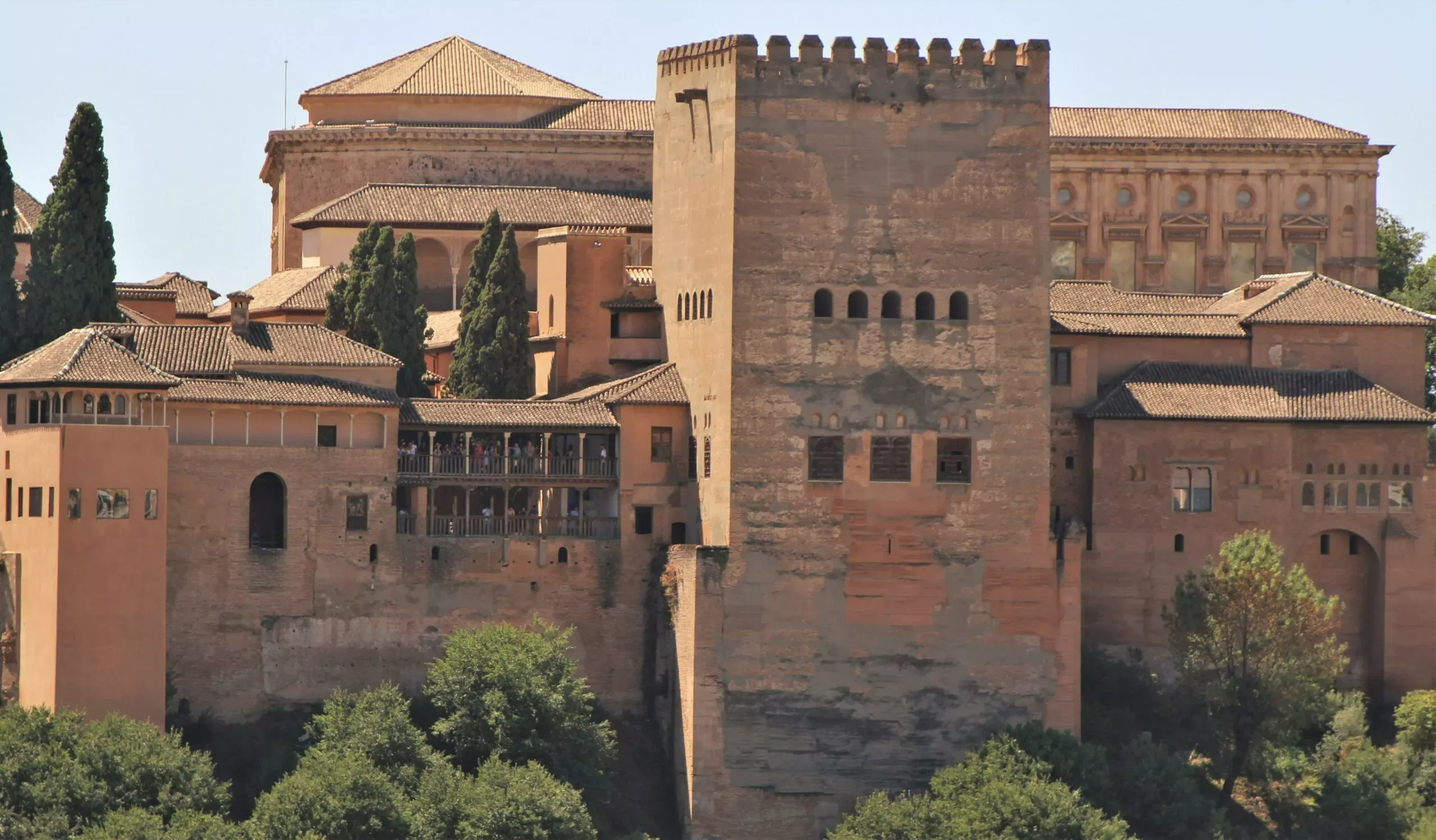
Centuries reshaped the Alhambra’s identity—periods of neglect, romantic rediscovery, and scholarly study. Travelers wrote with wonder; artists drew what was fragile and lovely; local memory carried lore across generations. Through change, the Alhambra kept its calling: a place where water and light teach calm and craft.
Resilience crystallised: the Alhambra as a place where private delight meets public heritage. Architecture served continuity, and continuity served community—definitions that still echo when fountains run and visitors learn to walk slowly.
Conservation, science, and continuity
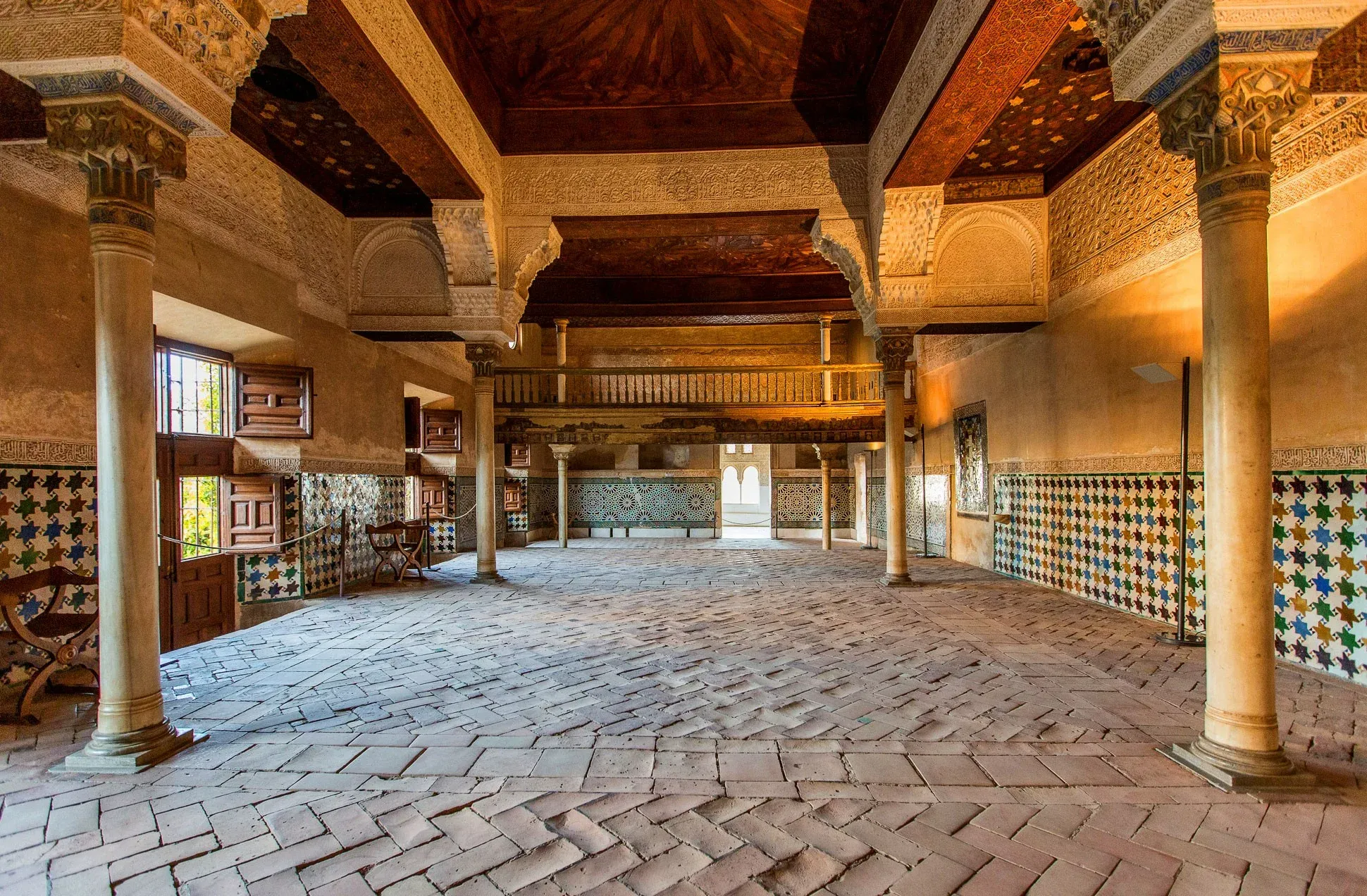
The Alhambra stood through weather, politics, and time. Conservation science studies stucco, tile, timber, and water—repair is practical and symbolic, affirming presence when absence might be easier. Continuity matters—craft persists, and the ensemble remains a compass for Andalusian identity.
Resilience here is quiet: patterns documented, routes adapted, and staff who understand that place can steady people. When you visit, you sense steadiness in small ways—the confidence of paths, the unshowy care in how gardens are kept, and the way history speaks without raising its voice.
Gardens and Generalife
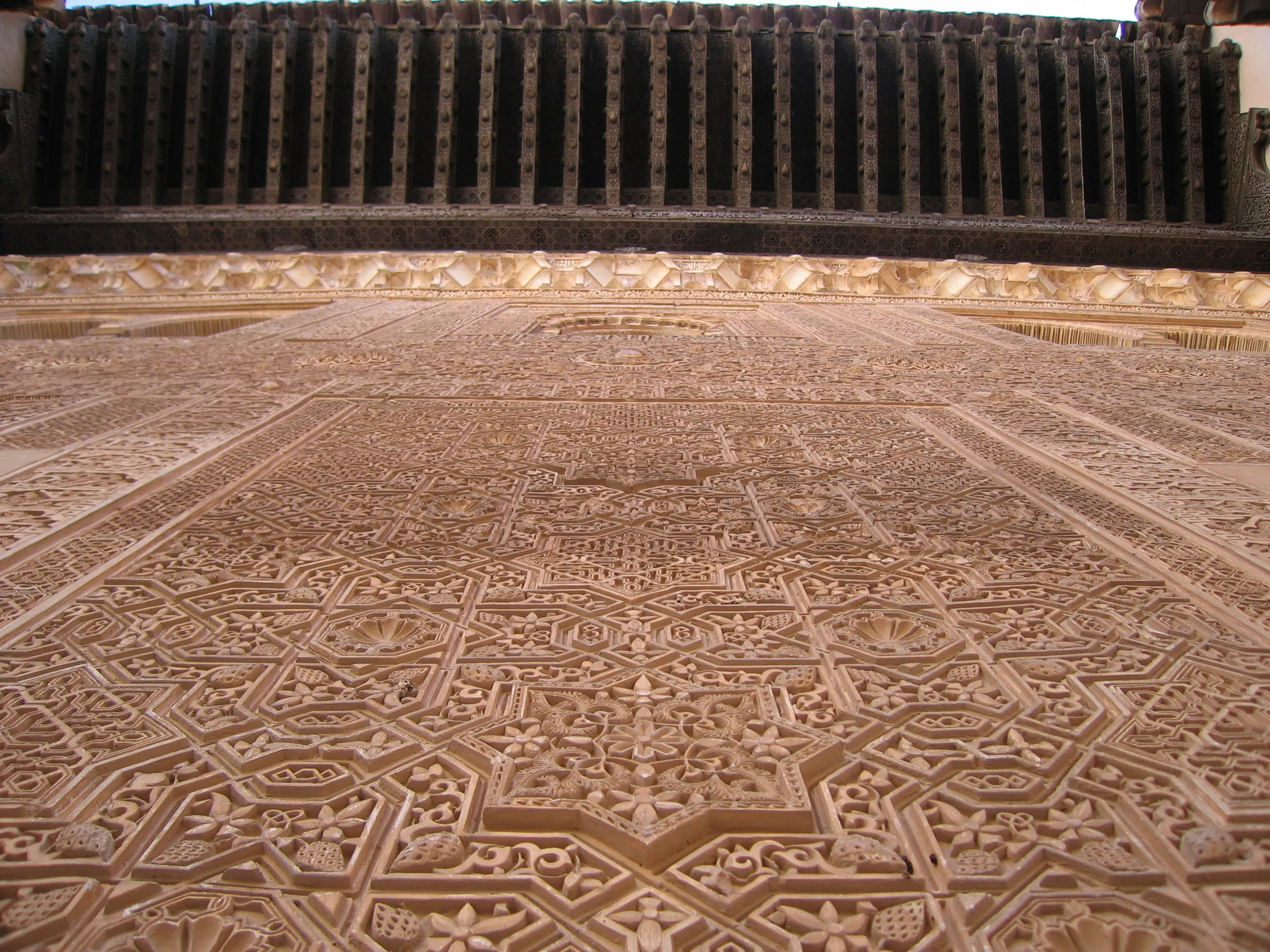
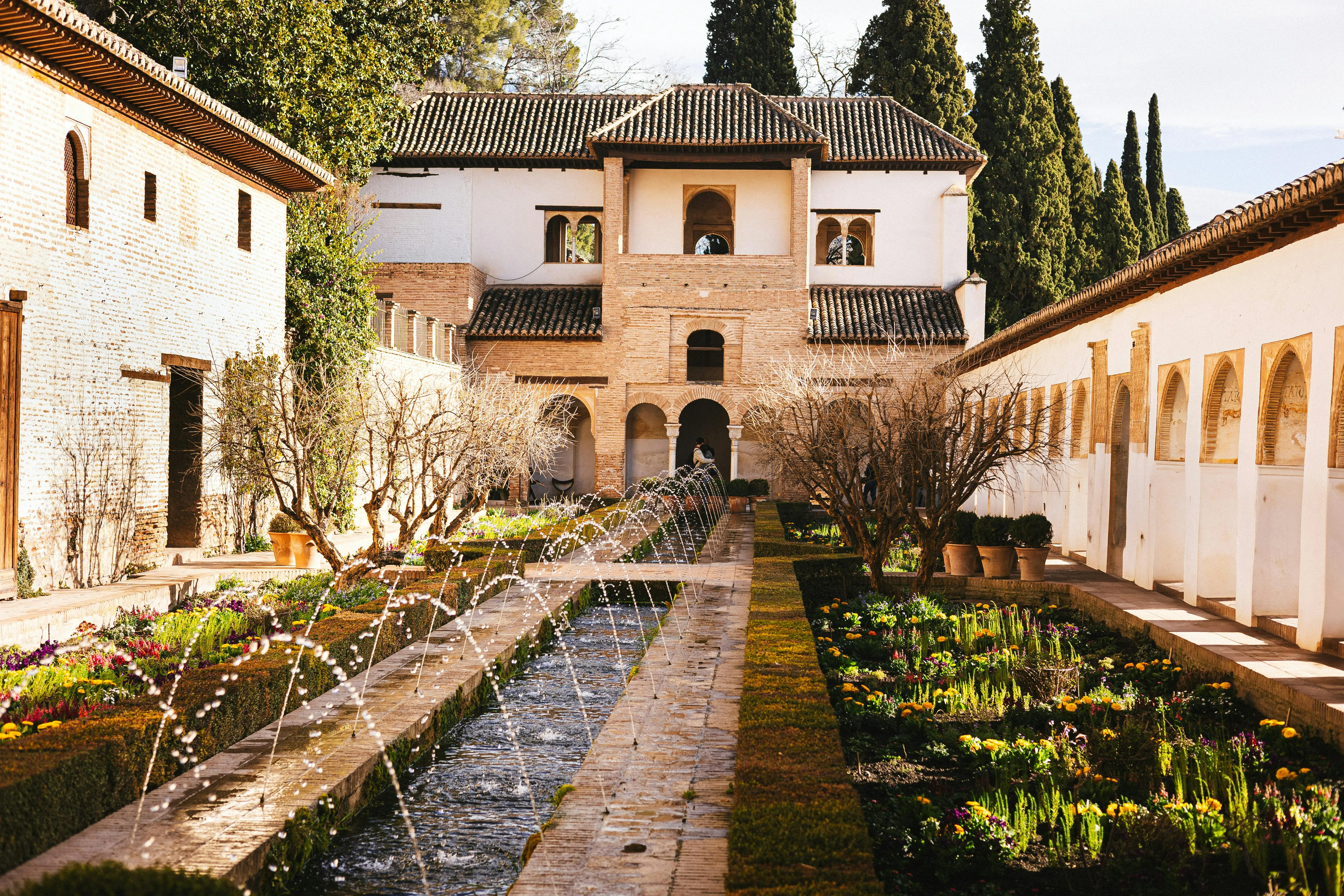
Today’s gardens balance tradition with modern care: irrigation revived with sensitivity, paths adjusted for access, and plantings chosen for shade, fragrance, and resilience. Water becomes choreography—channels guiding attention and breath at once.
Hospitality and access work hand in hand: timed entry, clear guidance, and trained staff make visiting feel gracious and simple—gardens and palaces for everyone, not only those who already know how to read them.
Routes, rhythms, and light
Routes are a stage, but also ritual of recognition. People walk, light shifts, and for a moment, private notice and public wonder align. Morning is crisp, noon is bold, evening is honey—memories attach to sound, shade, and view.
That rhythm turns architecture into feeling: stucco and water becoming chorus. Even if you visit when the courtyards are quiet, you see potential—the promise of shared occasions and a city that knows where to look when it needs to reflect.
Planning with historical context
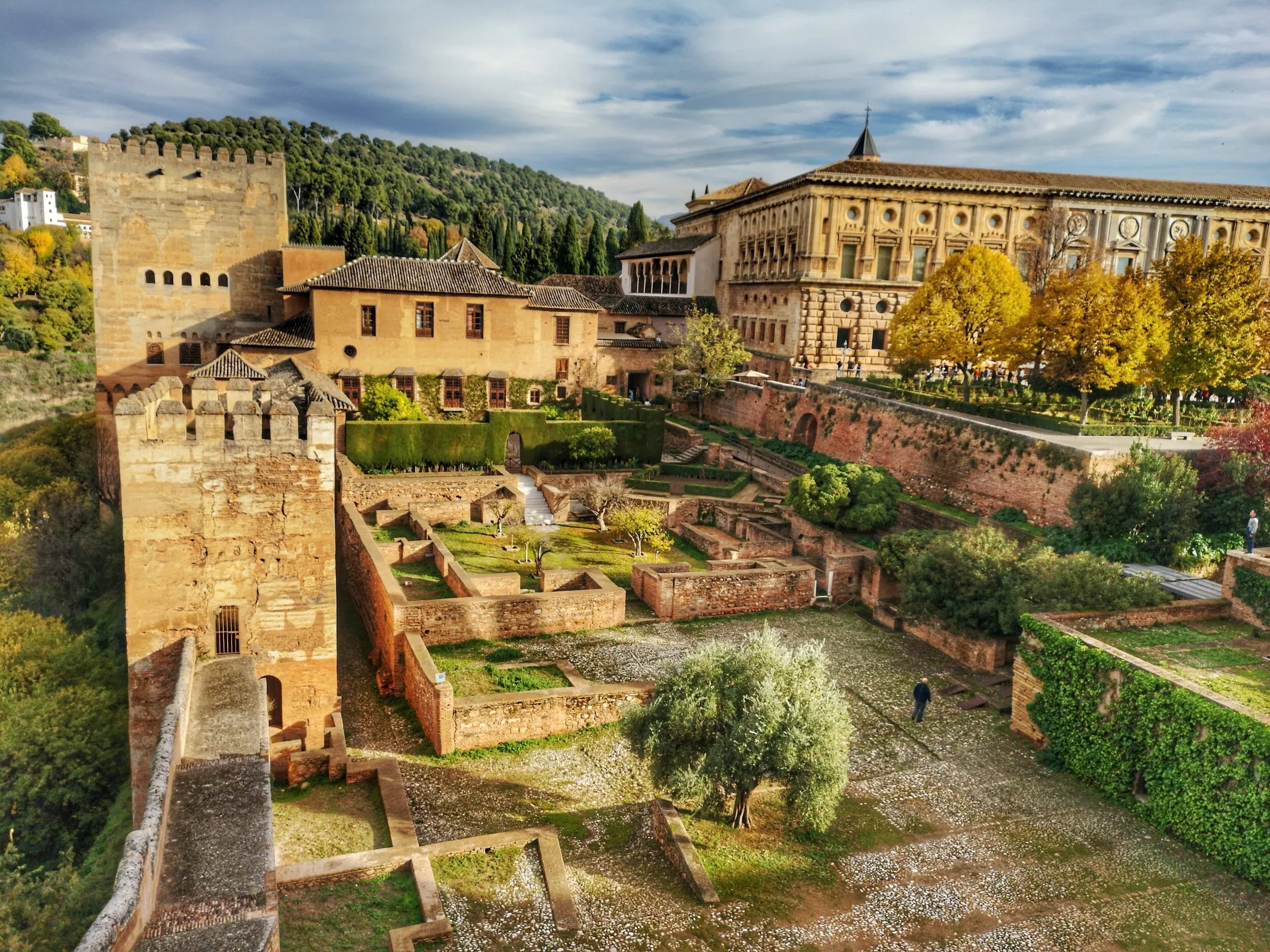
Begin with Nasrid Palaces if you can—use your timed slot, then move through Charles V’s palace and the Alcazaba. Look for craftsmanship that rewards a slower pace: muqarnas dissolving edges, cedar coffers punched by stars, tiles cooling your eye with blues and greens.
Context makes courtyards richer: read labels, listen to the multimedia guide, and pair palaces with Generalife so poetry and horticulture answer each other.
Granada and surroundings
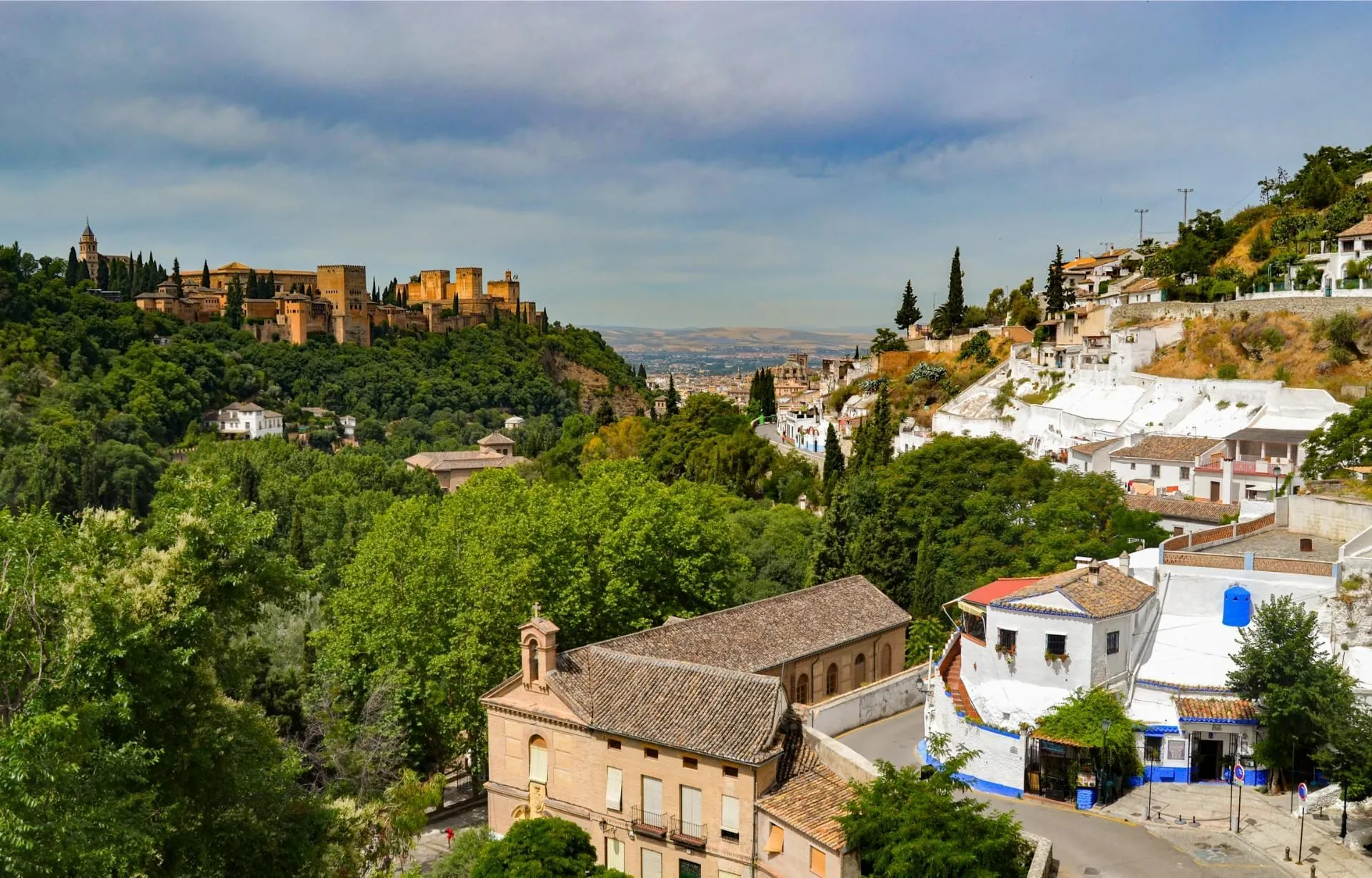
Granada gathers layers—Albaicín’s white streets, Sacromonte’s caves, cathedral squares, and river paths along the Darro. Walk to viewpoints and let sightlines explain how the city choreographs its grand gestures with mountains and light.
Nearby, the cathedral anchors the Christian city; San Nicolás and San Cristóbal show nature and architecture in conversation. The Alhambra sits quietly at the center of view, confident and calm.
Complementary nearby sites
Albaicín, Cathedral, Royal Chapel, Sacromonte, and Carrera del Darro make a beautiful circuit—history and light braided with cafés and viewpoints.
Pairing sites brings contrast: Moorish palaces and Christian chapels, gardens and caves, crowds and quiet viewpoints. It turns a single visit into a day that feels full yet unhurried.
Enduring legacy of the Alhambra
The Alhambra carries stories of poetry, governance, and continuity. It is where water and geometry find audience, where craft supports daily life, and where public feeling learns that beauty can be both fragile and resilient.
Conservation, adaptation, and thoughtful access keep its meaning alive—tradition with room to breathe, a palace‑city that belongs to many moments and generations.
Table of Contents
Origins and hilltop foundations
The Alhambra rises above Granada like a quiet thought becoming a city. Hilltop fortifications guarded a river valley and trade routes; over time, Nasrid rulers shaped stone and water into a palace‑citadel—courts strung with fountains, halls latticed with light, and gardens hung like poems from terraces. Foundations are practical—defense, storage, access—yet swiftly become lyrical: water lines are veins, walls become pages for calligraphy, and geometry becomes a way of thinking in public.
What we see today is layering: fortress bones (Alcazaba), palaces of water and text (Nasrid), a Renaissance ring (Charles V), and gardens (Generalife) that bind the ensemble with shade and sound. It is a place where architecture is not backdrop but instrument—light tuned to patios, water tuned to quiet, and craft tuned to memory, each part playing in harmony with Granada’s changing sky.
Nasrid courts: poetry, water, and power
Court life becomes a shared language here: audiences, diplomatic meetings, and daily rhythms carried on the backs of fountains and shade. Water is protocol and poetry—cooling the air, soothing the pace, reflecting architecture until the building seems to breathe. Calligraphy curves along walls, verses lifting faith and governance into conversation; cedar ceilings pattern thought with order and play.
These rhythms bind city to hilltop: artisans, gardeners, officials, poets, and guards all moving within a geometry that guides sightlines and steps. Even when you visit quietly, you feel those traces—the cadence of water, the etiquette of shade and light, and the sense that Granada looks up here not only to see but to imagine.
Architecture and craft: stucco, tile, cedar
Inside, ornament is intention: carved stucco like lace, glazed tile cool to the touch, cedar ceilings cut into stars and coffers that think in geometry. Motifs repeat and vary—arabesques unfolding, kufic text becoming border and blessing, muqarnas dissolving edges into honeycomb light. Every courtyard balances symbolism with hospitality: places to sit, feel shade, hear water, and notice how color and texture teach calm.
Architecture here is choreography: sightlines to towers and Sierra Nevada, routes that step from patio to hall to mirador, and a cadence that guides you by sound (water), touch (stone and tile), and temperature (shade and sun). The result is immersive without hurry—details invite attention like friends calling softly from across a garden.
Fortress and city: Alcazaba and views
The Alcazaba holds the oldest bones of the Alhambra: towers like syllables of stone, ramparts folded along the hill, lookouts teaching you how the city sits in its valley. Wind and horizon conspire to turn viewpoints into stories—Granada becomes maps and memory at once.
It feels practical and poetic: defense lines, storage, and pathways stitched with beauty, always returning you to a view that steadies the pace. Multimedia guides add voices—how towers linked signals, how walls read the landscape, why routes curve to temper heat and light.
Conquest, change, and Renaissance layers
History here turns on a hinge: the Nasrid dynasty gives way to Castilian rule; palaces change use and meaning. Renaissance ambition arrives and sets a circular palace alongside filigree arcs—contrast made visible. Some halls fall quiet, some gardens survive by luck and care; narratives braid loss, adaptation, and new ceremony.
The Alhambra teaches that memory is practical care: conservation records, craftsmanship revived, water systems studied and restored. Paired with the Generalife, the ensemble rounds out the visit—poetry answered by horticulture, palaces balanced by terraces.
Loss, lore, and rediscovery
Centuries reshaped the Alhambra’s identity—periods of neglect, romantic rediscovery, and scholarly study. Travelers wrote with wonder; artists drew what was fragile and lovely; local memory carried lore across generations. Through change, the Alhambra kept its calling: a place where water and light teach calm and craft.
Resilience crystallised: the Alhambra as a place where private delight meets public heritage. Architecture served continuity, and continuity served community—definitions that still echo when fountains run and visitors learn to walk slowly.
Conservation, science, and continuity
The Alhambra stood through weather, politics, and time. Conservation science studies stucco, tile, timber, and water—repair is practical and symbolic, affirming presence when absence might be easier. Continuity matters—craft persists, and the ensemble remains a compass for Andalusian identity.
Resilience here is quiet: patterns documented, routes adapted, and staff who understand that place can steady people. When you visit, you sense steadiness in small ways—the confidence of paths, the unshowy care in how gardens are kept, and the way history speaks without raising its voice.
Gardens and Generalife
Today’s gardens balance tradition with modern care: irrigation revived with sensitivity, paths adjusted for access, and plantings chosen for shade, fragrance, and resilience. Water becomes choreography—channels guiding attention and breath at once.
Hospitality and access work hand in hand: timed entry, clear guidance, and trained staff make visiting feel gracious and simple—gardens and palaces for everyone, not only those who already know how to read them.
Routes, rhythms, and light
Routes are a stage, but also ritual of recognition. People walk, light shifts, and for a moment, private notice and public wonder align. Morning is crisp, noon is bold, evening is honey—memories attach to sound, shade, and view.
That rhythm turns architecture into feeling: stucco and water becoming chorus. Even if you visit when the courtyards are quiet, you see potential—the promise of shared occasions and a city that knows where to look when it needs to reflect.
Planning with historical context
Begin with Nasrid Palaces if you can—use your timed slot, then move through Charles V’s palace and the Alcazaba. Look for craftsmanship that rewards a slower pace: muqarnas dissolving edges, cedar coffers punched by stars, tiles cooling your eye with blues and greens.
Context makes courtyards richer: read labels, listen to the multimedia guide, and pair palaces with Generalife so poetry and horticulture answer each other.
Granada and surroundings
Granada gathers layers—Albaicín’s white streets, Sacromonte’s caves, cathedral squares, and river paths along the Darro. Walk to viewpoints and let sightlines explain how the city choreographs its grand gestures with mountains and light.
Nearby, the cathedral anchors the Christian city; San Nicolás and San Cristóbal show nature and architecture in conversation. The Alhambra sits quietly at the center of view, confident and calm.
Complementary nearby sites
Albaicín, Cathedral, Royal Chapel, Sacromonte, and Carrera del Darro make a beautiful circuit—history and light braided with cafés and viewpoints.
Pairing sites brings contrast: Moorish palaces and Christian chapels, gardens and caves, crowds and quiet viewpoints. It turns a single visit into a day that feels full yet unhurried.
Enduring legacy of the Alhambra
The Alhambra carries stories of poetry, governance, and continuity. It is where water and geometry find audience, where craft supports daily life, and where public feeling learns that beauty can be both fragile and resilient.
Conservation, adaptation, and thoughtful access keep its meaning alive—tradition with room to breathe, a palace‑city that belongs to many moments and generations.